Mobile surveillance · Arizona
See the whole site.
No power. No Wi-Fi.
No trenching.
A 20-foot solar mast, up to eight cameras, infrared night vision, and live video on your phone — towed in, stood up, and running the same day. Nothing to install. Nothing to dig.
Deployed from Payson, Arizona · Serving Arizona statewide
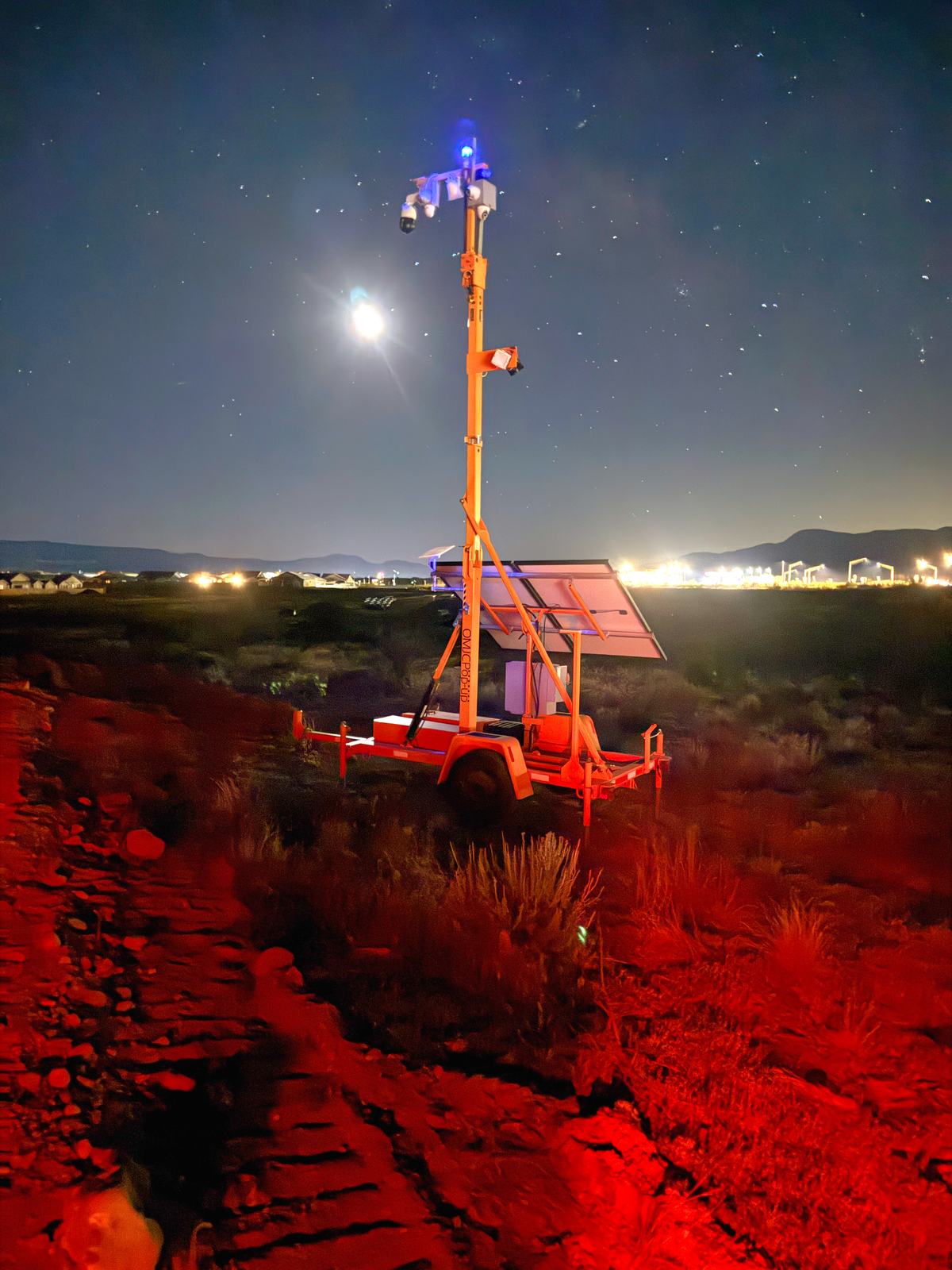 Active deployment · Central Arizona
The problem
A jobsite is worth the most on the nights nobody is watching it.
Copper, tools, fuel, appliances, and unattended equipment all leave the same way — quietly, after dark, through a gap in a temporary fence. By the time the first crew arrives, the loss is already a schedule problem, not just a line item.
Fixed cameras can’t follow the work
Permanent cameras need permanent power, a permanent mounting point, and a network drop. On a site that changes shape every three weeks, you end up watching last month’s layout — and paying an electrician every time you need a new angle.
Guards cost more and see less
A single overnight guard covers one position at a time, takes breaks, and goes home at shift change. A trailer covers the whole parcel from 20 feet up, records every hour of it, and doesn’t call out sick.
Insurance doesn’t replace the schedule
A claim might cover the transformer. It doesn’t cover the eleven weeks of lead time to get another one, the crew standing around, or the liquidated damages at the far end of the delay.
Capability
One self-powered platform. Four jobs at once.
Every Guardian Rover 360 trailer arrives configured, commissioned, and streaming. You get coverage, deterrence, evidence, and a phone number that a local person answers.
Total visibility
A 20-foot mast puts the lenses above fencing, stockpiles, conex boxes, and framing. Six to eight cameras cover the full perimeter at once, with two 25× optical-zoom PTZs that can push in far enough to read a plate at the gate or a number off a trailer across the parcel.
Infrared illumination carries the picture through full dark — no site lighting required, and no washed-out frame when headlights swing through.
Active deterrence
Most intrusions end before they start. Strobes and sirens fire on the trailer, and two-way audio lets a real voice tell someone by name what they’re standing next to and that they’re on camera. That conversation resolves the overwhelming majority of after-hours visits without anyone driving out.
When it doesn’t, you have timestamped, exportable footage from multiple angles — the kind a police report and an insurance adjuster can both use.
Connected anywhere
Satellite connectivity means the trailer works where cellular doesn’t — raw dirt, canyon floors, and parcels well outside carrier coverage. Pull up live or recorded video from a phone, a tablet, or the trailer in the superintendent’s office.
Solar charging with battery reserve keeps it running through multiple days of overcast weather. No generator, no fuel run, no meter.
Moves with the project
When the work moves, we move the trailer. DNJ delivers, positions, commissions, relocates, and demobilizes it — one vendor, one invoice, one phone number. Nothing is bolted down, so a repositioning is a scheduling question, not a change order.
In the field
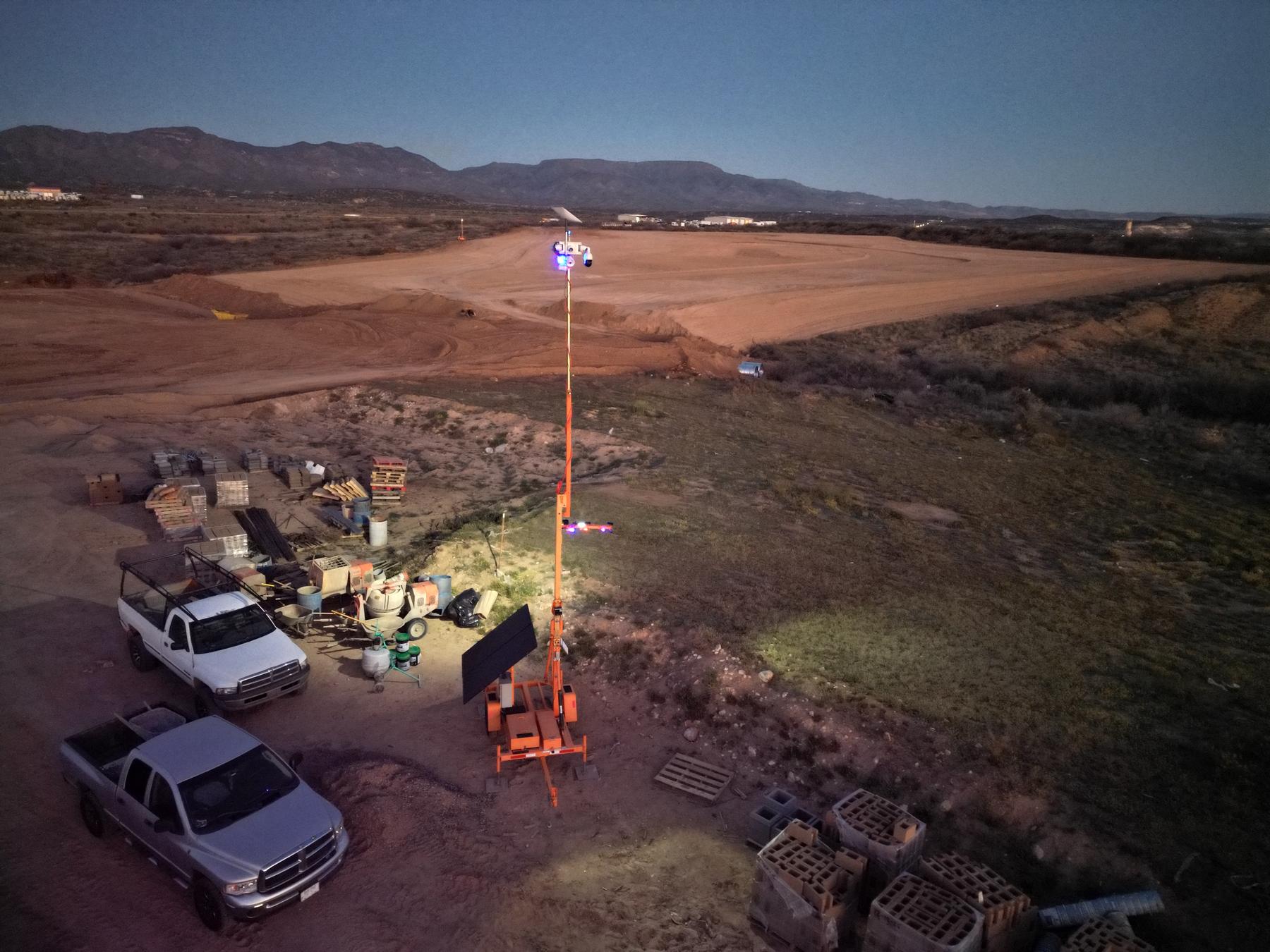
Three trailers. One active Arizona development.
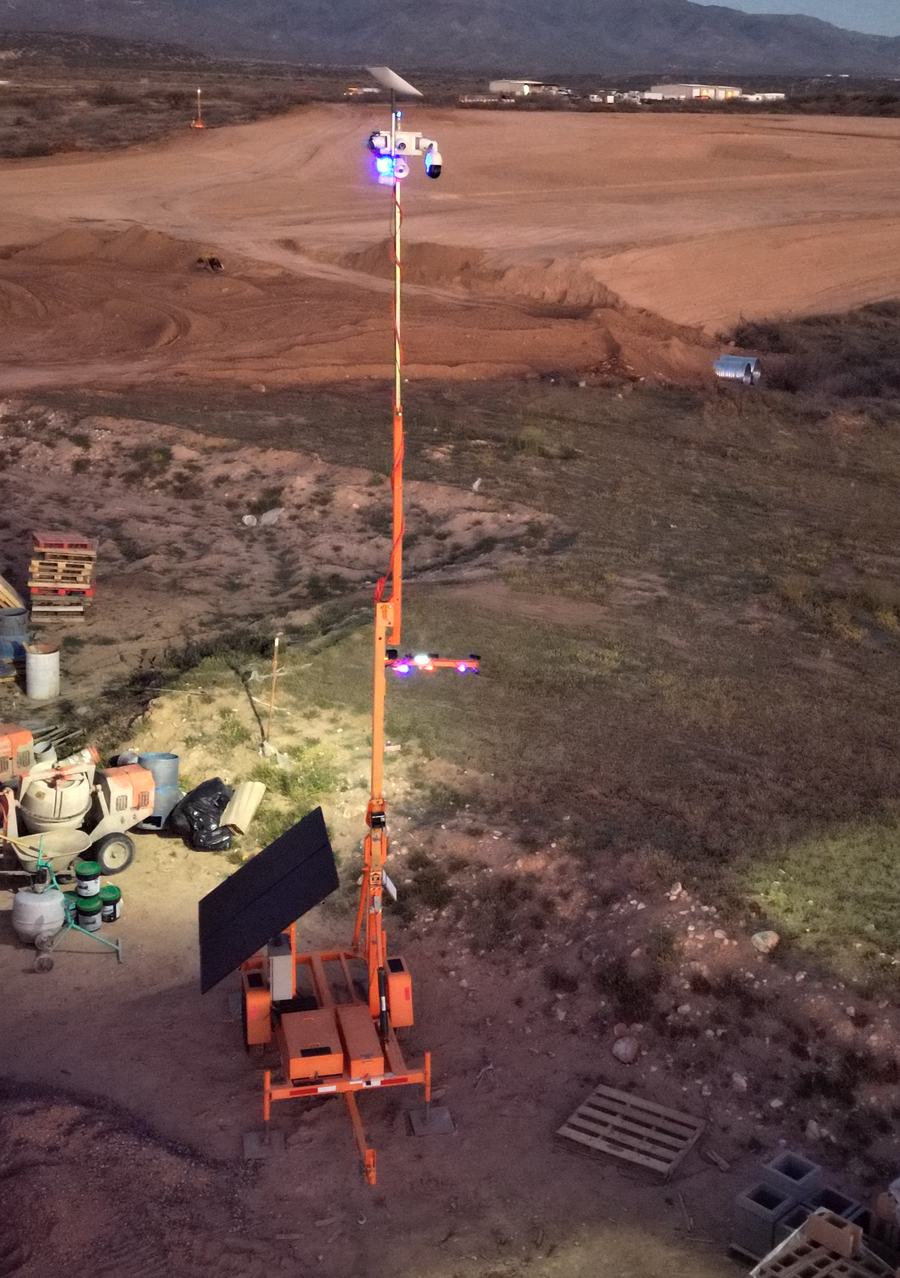
Guardian Rover 360 trailers are deployed right now at an Arizona housing development, covering graded pads, material laydown, and the equipment yard — months before permanent power, internet, or fixed cameras exist on that parcel.
Deployment sequence
From first call to live video.
Five steps, in this order. Most sites go from quote to streaming within a few business days.
Site coverage plan
Send the parcel, the duration, and what matters most. We come back with recommended trailer positions, what each one sees, and a fixed quote.
Delivery and placement
We tow it in, set it on the position from the plan, level and stabilize it, and raise the mast. No pad, no footing, no electrician.
Commissioning and walkthrough
Cameras are aimed to the plan, the uplink is verified, and your team gets logins plus a walkthrough of live view, playback, and the talk-down function.
Live coverage and support
Watch it yourself, or let the deterrence run on its own. Either way a local Arizona number answers when something needs attention.
Relocation and demobilization
As phases close and the work moves, we reposition. When the project ends, we pick it up. Nothing is left behind to remove or repair.
Where it works
Built for sites that don’t have infrastructure yet.
Residential development
Graded pads, framed units, and appliance-stage homes across a subdivision that grows every week.
Exposure · appliances, copper, lumber
Commercial construction
Perimeter and gate coverage before permanent power, with talk-down on the laydown yard.
Exposure · tools, materials, fuel
Solar & utility
Long, remote, fenced runs with no cell service and high-value inverters and conductor on the ground.
Exposure · copper, panels, inverters
Equipment & material yards
Standing coverage over iron, attachments, and fuel with plate-readable zoom at the gate.
Exposure · machinery, diesel, trailers
Municipal & public works
Parks, lots, and civic projects where a fixed system is a capital project and the need is this season.
Exposure · vandalism, dumping, liability
Events & temporary sites
Short-term coverage that arrives before the crowd, moves with the footprint, and leaves nothing behind.
Exposure · crowd safety, staging, assets
Comparison
Against the alternatives.
| Guardian Rover 360 | Overnight guard | Fixed camera install | |
|---|---|---|---|
| Time to coverage | Days | Days to weeks | Weeks to months |
| Needs site power | No — solar + battery | No | Yes |
| Needs internet on site | No — satellite uplink | No | Usually |
| Simultaneous coverage | Full perimeter, 6–8 views | One position at a time | Fixed points only |
| Recorded evidence | Continuous, exportable | Written report | Continuous |
| Moves as work moves | Towed, hours | N/A | Re-install required |
| Cost trend over months | Flat rental | Accrues hourly, every night | Capital + trenching + removal |
| Left behind at closeout | Nothing | Nothing | Conduit, mounts, patching |
Comparison reflects typical Arizona jobsite conditions. Your numbers will depend on site size, duration, and crew schedule.
Proof
What operators say.
“Placeholder testimonial. Ask the superintendent on your current development for two sentences about what changed after the trailers went up — ideally naming a specific night or a specific loss that didn’t happen.”
Name, Title — Company
Replace before launch
Common questions
Before you call.
Do I need power or internet on site?
No. Each trailer generates its own power through a solar array with battery reserve, and connects over satellite. That is the whole point — it works on raw dirt, months before a transformer or a network drop exists.
How fast can a trailer be on my site?
Typically a few business days from an approved quote, subject to availability. If you are working against a specific date, say so on the quote request and we will tell you honestly whether we can hit it.
Can someone actually watch the feed, or is it just recording?
Both are available. Your team gets live access on phone and desktop. If you want monitored service with live talk-down, confirm what DNJ offers and during what hours.
What happens if the trailer is tampered with?
Approach triggers on-unit deterrence — strobe, siren, and two-way audio. The trailer’s own cameras record the attempt from multiple angles, and DNJ is notified. Describe your actual alerting and response process here.
Next step
Tell us about the site. We’ll send back a coverage plan.
Share the parcel, the timeline, and what you’re trying to protect. You get back recommended trailer placements, expected coverage, and a fixed quote — no subscription math, no surprise fees.