Industries
Who puts a trailer on site.
The common thread is not the industry. It is a valuable site with no permanent infrastructure, a footprint that changes, and a window of months — not years — where it is exposed.
Residential development
Highest exposure at finish stageA subdivision is a moving target. Graded pads become framed shells, then units with appliances, fixtures, HVAC condensers, and water heaters sitting inside unlocked doors. The most valuable week of a house is often the week before it is secured.
Trailers sit on the active phase and move as the phase closes — covering the entrance, the model row, and the laydown, with zoom coverage on whichever block is at finish stage.
Commercial construction
Before permanent powerBetween notice to proceed and permanent power there is a long stretch where the most expensive things on the site are the least protected: switchgear, rooftop units, spools of wire, and every tool that did not go home in a truck.
One trailer typically covers the gate and laydown yard, with a second on the back side of the structure once vertical work starts.
Solar & utility
Beyond cellular coverageSolar and transmission work happens where nobody lives, which is exactly where cellular coverage ends and response times get long. Copper conductor, inverters, and panels are high-value, portable, and easy to resell.
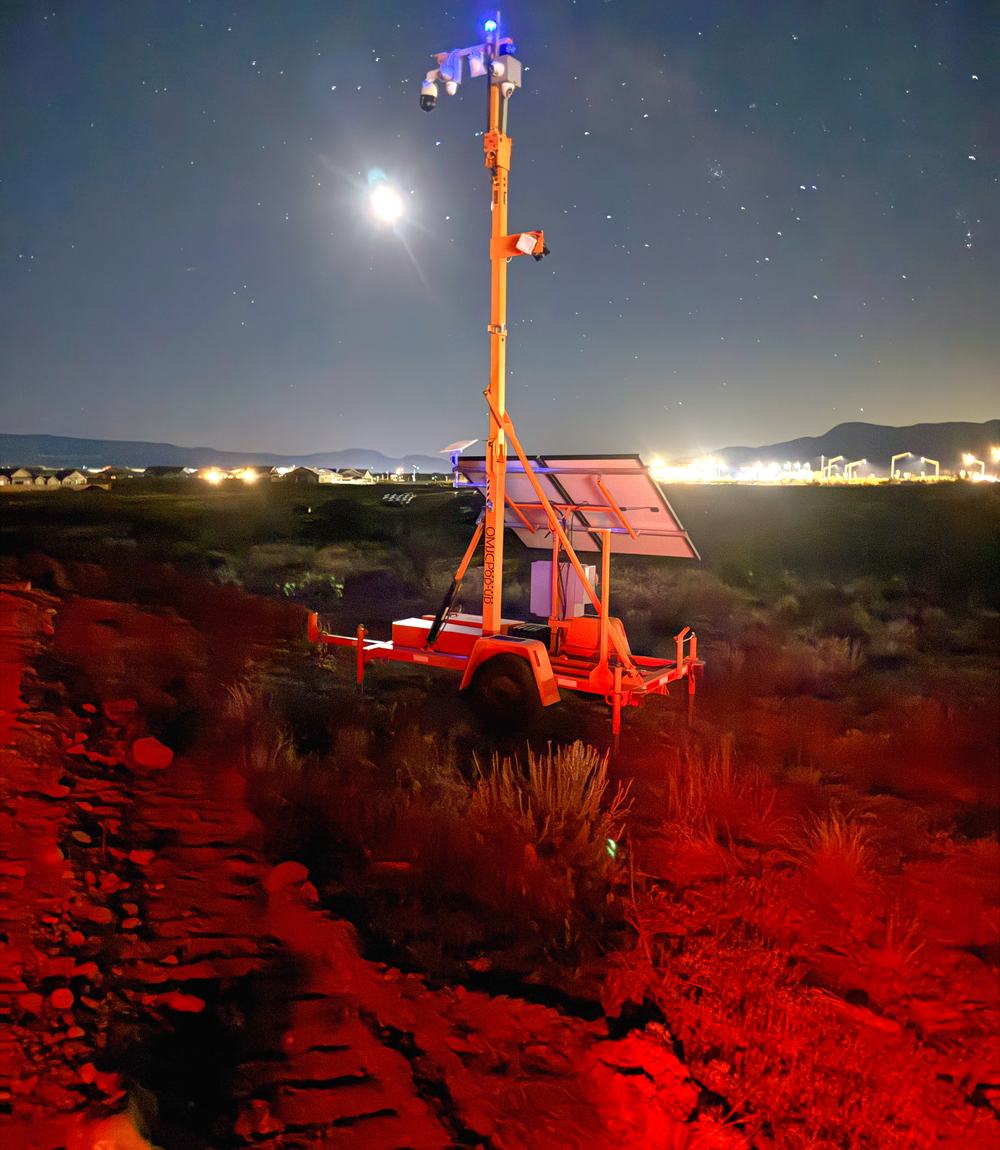
Satellite uplink is the differentiator here — the trailer works on parcels where a cellular-only system simply has nothing to connect to.
Equipment & material yards
Standing deploymentYards hold iron, attachments, diesel, and trailers in one place with a single gate. That concentration is convenient for your crew and convenient for anyone else. Plate-readable zoom on the gate changes what a report can prove.
Yards are frequently longer-term deployments, where the rental is a substitute for a capital camera project nobody wants to fund.
Municipal & public works
Seasonal or project-lengthParks, trailheads, transfer stations, lots, and civic construction all face vandalism, illegal dumping, and liability exposure — usually with a budget cycle that makes a permanent system a multi-year proposition.
A rental is an operating expense that can start this month and end when the season does.
Events & temporary sites
Days to weeksFairgrounds, festivals, rodeos, races, and staging areas need coverage that arrives before the crowd, sees over it, and leaves no trace afterward. Elevated PTZ gives event staff a view of entrances, parking, and vendor rows at once.
Agriculture & land holdings
Wide, unfenced parcelsPumps, wells, fencing, fuel, and equipment sit across acreage nobody can watch continuously. Elevated cameras with zoom cover far more ground than any practical number of fixed installations, and move to wherever the current problem is.
Not on this list?
If it is valuable, temporary, and off-grid, it fits.
Tell us what the site is and what you are protecting. If a trailer is not the right answer for it, we will tell you that instead of quoting it.